
Starting point
Role, programme context, prior exposure and the workplace expectation being addressed.
Your selected goalDevelop talent
Bosigo stories should show the context, the work and what changed. Verified programme context can be published without turning people into marketing claims.
Verified and approval-gated evidence are separatedEach published story must explain who participated, what they worked on, the support involved and what can responsibly be concluded.
Role, programme context, prior exposure and the workplace expectation being addressed.
The real task, project, simulation or workplace situation through which capability was practised.
What guidance was received, what changed and how the participant responded over time.
Approved work samples, supervisor context, verified measures and the boundaries of the claim.
Each evidence type has a different approval requirement. Unverified material remains clearly separated from public claims.

Bosigo provides programme experiences within MICT SETA-funded context, including pathways introduced through Gijima. This is delivery context, not a claim of employment outcomes or uniform participant performance.
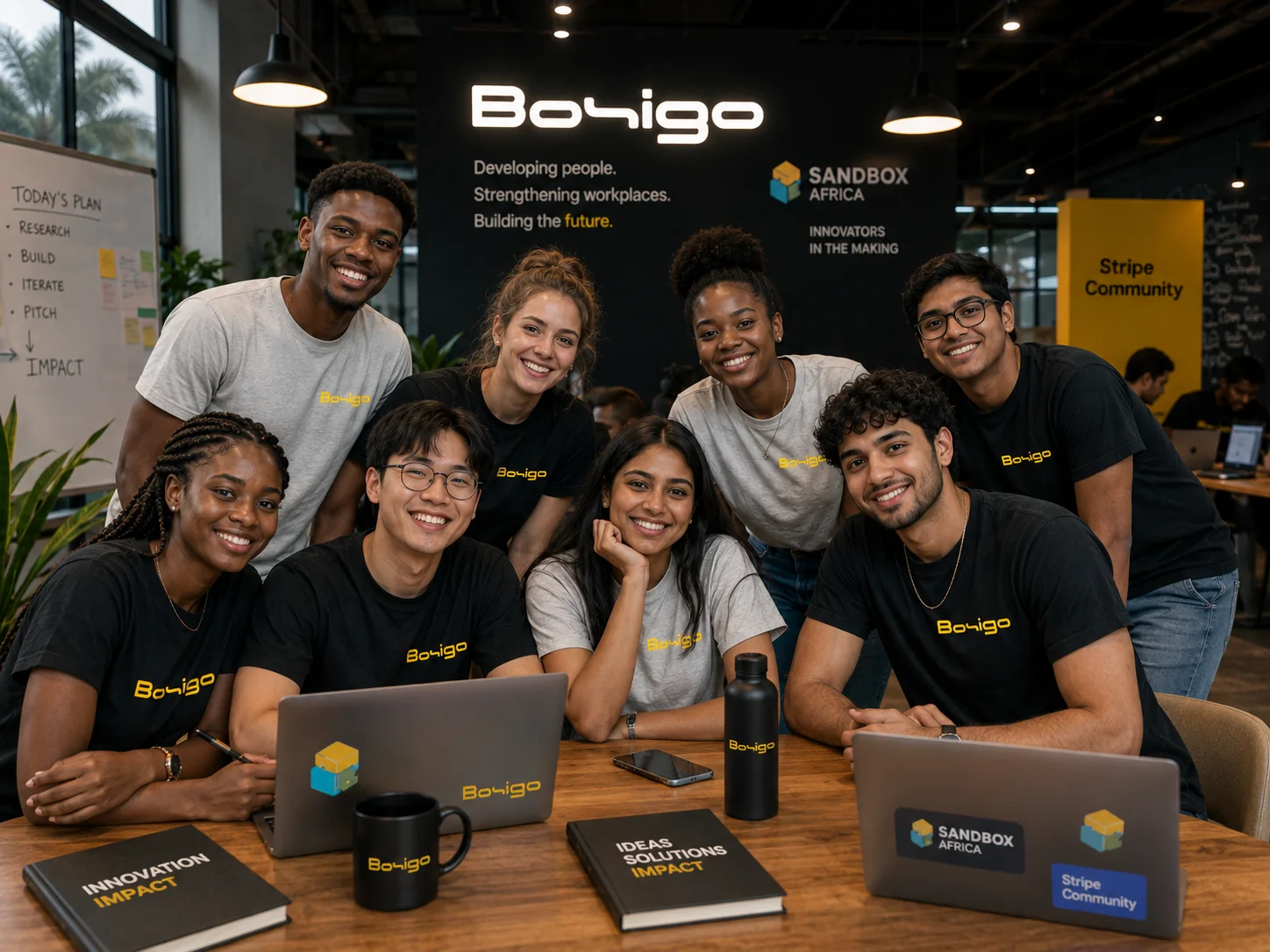
Bosigo uses workplace and innovation exposure to give emerging talent context for how professional contribution, collaboration and accountability look in practice. The photograph documents participation; it is not presented as proof of a guaranteed employment outcome.

Programme participation can include collaborative activities, events and challenge-based exposure. Bosigo separates evidence of participation from claims about individual performance, placement or commercial success.

Future work samples, participant stories and organisational outcomes will be added when the relevant evidence, permissions and attribution are available. Bosigo does not fill evidence gaps with invented case studies.
Consent, dignity, accuracy and context are part of the experience—not an administrative afterthought.
Participants should know where their story will appear, what will be shown and how they can raise concerns.
Clearly distinguish Bosigo’s contribution, the participant’s work, the employer’s role and any external support.
Stories may show progress or opportunity, but should not promise placement, employment, funding or commercial success.
The evidence model explains what should be recorded, why it matters and how human context remains visible.
Make evidence useful
Good stories are stronger when they are supported by defined outcomes, observable behaviours and responsible evidence. Bosigo can design that measurement into the programme from the beginning.